
Cairo researchers turn a soil bacterium into a low-cost green biosurfactant
Researchers led by Mohamed K. Elsabroot at the Egyptian Chinese University in Cairo isolated a rhamnolipid-producing Pseudomonas aeruginosa strain from oil-contaminated Egyptian soil and tuned its production to a validated 59.36 µg/mL — a greener alternative to synthetic surfactants.
A cleaner chemistry, brewed by bacteria
Rhamnolipids are natural soap-like molecules made by some strains of the bacterium Pseudomonas aeruginosa. They belong to a family called biosurfactants — compounds that lower the surface tension of liquids and are used in pharmaceuticals, cosmetics and industry. Because microbes make them, they break down more readily than many synthetic surfactants, and they can be produced at low cost, which is why researchers keep hunting for strains that make a lot of them. The Cairo team went looking in Egypt’s own oil-contaminated soil.
The team was led by Mohamed K. Elsabroot of the Department of Microbiology and Immunology at the Faculty of Pharmacy, Egyptian Chinese University in Cairo, working with Ann A. Elshamy, Ahmad M. Abbas and Mahmoud A. Yassien. From 31 oil-contaminated soil samples, the researchers recovered 20 Pseudomonas isolates and put each one through three screening tests to see which could make rhamnolipids.
How the team found PS11
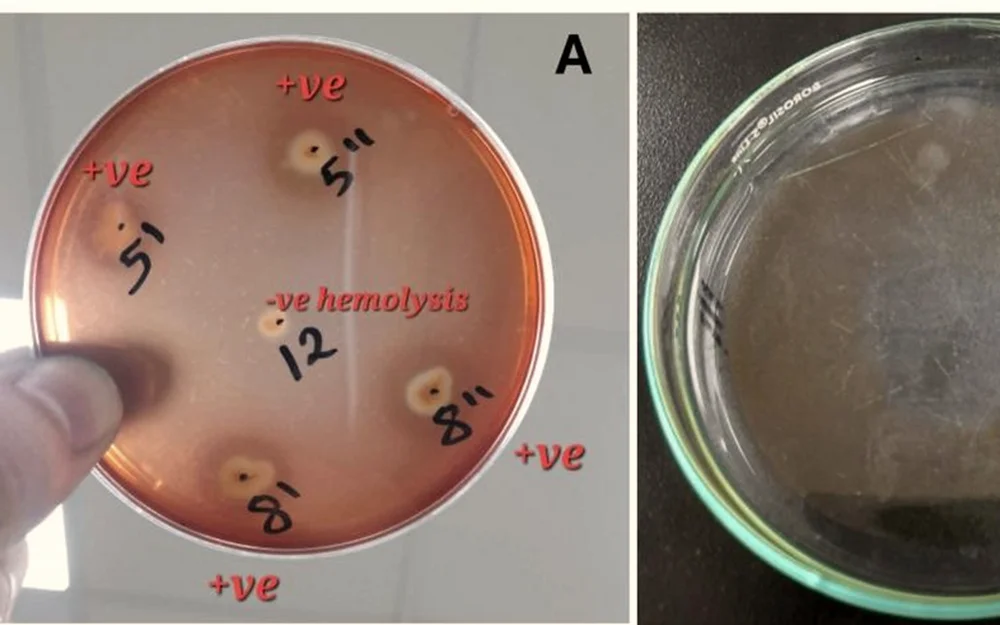
Each screening test catches a different sign of surfactant activity: the blood-agar test looks for haemolysis, the zone of broken-down red blood cells around a colony; the oil-spreading test looks for a clear zone when a drop of culture liquid is placed on an oil film; and the CTAB agar test looks for blue zones that mark the anionic character of rhamnolipids. Four isolates passed all three tests, and of those, PS11 produced the most rhamnolipid — so the team chose it for detailed chemical analysis and for the optimisation work.
The team then confirmed the product really was a rhamnolipid, using three analytical techniques: thin-layer chromatography, Fourier-transform infrared spectroscopy and proton nuclear magnetic resonance (1H NMR). All three agreed on the structure.
Tuning the recipe
Then came the optimisation. Using a Box-Behnken design — a statistical method that tests combinations of factors efficiently, instead of changing one thing at a time — the team varied three things: temperature (28 to 37 °C), incubation time (five to nine days) and agitation speed (250 to 350 revolutions per minute). The resulting model was highly significant, with R² of 0.9806, and it pointed to an optimum of 28 °C, five days and 350 rpm, predicting a maximum yield of 61.54 micrograms per millilitre.
When the team ran the culture at exactly those conditions, three independent runs averaged 59.36 ± 0.60 micrograms per millilitre — within 3.5% of the prediction, confirming that the model works and the recipe is reliable.
Why it matters for Cairo
The result is a small but concrete piece of green chemistry from a Cairo laboratory: a locally isolated microbe, tuned with statistics rather than trial and error, producing a biodegradable compound that pharmacy and industry can use in place of synthetic surfactants. The work was published on 20 November in BMC Microbiology.
The yields are laboratory-scale, measured in micrograms per millilitre — whether the process can be scaled up is a question the paper leaves open. But the starting point matters: the strain came from Egyptian soil, the work was done in Cairo laboratories, and the recipe to grow it at its best is now written down.
More from Cairo
Kiwe launches Egypt's first 'social money' app and card
Egyptian fintech startup Kiwe launched its app and payment card in Cairo on 22 November 2026, pitching itself as Egypt's first social money app. Users can download the app, open an account and order a Kiwe Card — developed with Banque Misr, Visa and Meeza — for payments, instant transfers and ATM withdrawals, plus shared expenses, bill splitting and group savings through a feature called Pools.
Yango's Yasmina, the Arabic-first AI assistant, launches in Egypt
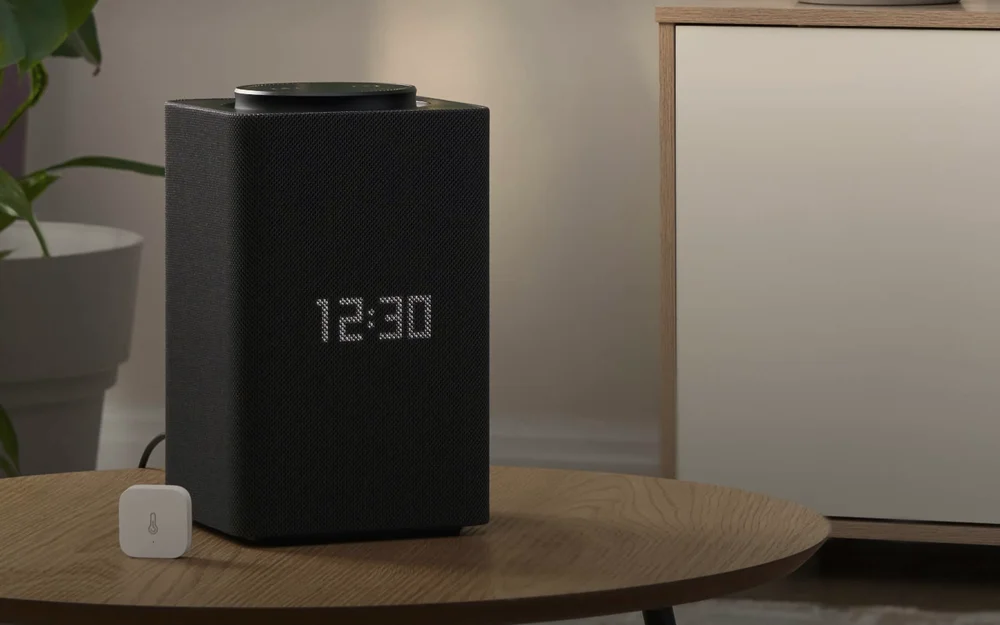
Yango Group has launched Yasmina, its Arabic-first AI assistant, in Egypt — the first market beyond the Gulf — with a version trained for Egyptian Arabic, its expressions and its humour, integrated with Yango Play and on sale as the Yasmina Lite speaker for EGP 3,999.

Asal survives Ibrahim epic to set up all-Egyptian China Open final with Zakaria
World No.1 Mostafa Asal edged Youssef Ibrahim 3-2 in an 80-minute China Open semi-final in Shanghai, and will face fellow Egyptian Mohamad Zakaria in an all-Egyptian final today.