
The Nile: a week of warnings in Cairo, a 31-billion-cubic-metre gap, and no breakthrough
Cairo Water Week, 25–29 October, put Egypt's Nile case in one place: a presidential warning against any fait accompli, a minister's water gap of 120 billion cubic metres needed against 89 available, Ethiopia's hydro-diplomacy reply, and the El Alamein declaration that tied the Nile to the Red Sea.
A week about water, in Cairo
The ninth Cairo Water Week ran from 25 to 29 October 2026 in Cairo, under the theme “Water as a Catalyst for Peace, Shared Prosperity and a Sustainable Planet”, under the patronage of President Abdel Fattah El-Sisi. According to the irrigation ministry’s final preparations, it brought together 20 ministers, four special envoys and 19 deputy ministers or heads of delegation, with 137 technical and scientific sessions organised with partners including the FAO, the EU, UNESCO and the World Water Council.
The week was also a staging post, not an end in itself: it hosted a final preparatory meeting for the 2026 United Nations Water Conference, to be held in Abu Dhabi from 8 to 10 December, and ran alongside the seventh Arab Water Conference on 26 and 27 October. For Cairo readers, that is the frame for everything that followed — a week in which the Nile was discussed in Cairo as diplomacy, as engineering and as arithmetic, all at once.
The warning from the opening day
In a recorded address opening the week on 25 October, President El-Sisi said the Nile accounts for more than 98 per cent of Egypt’s renewable water resources, and warned that Egypt would not compromise its water security. “Any wager that Egypt will accept a fait accompli or compromise its water security is a losing wager,” he said, adding that Egypt would not shirk its responsibility to protect its people’s interests.
The same address set out the other half of Egypt’s stated position: that every Nile Basin country has a right to development and to benefit from its natural resources, provided that right is exercised responsibly, without harming other states or compromising their water security. Egypt, he said, remained committed to cooperation based on international law, consultation, coordination, good neighbourliness and the principle of causing no harm — and pointed to cooperation with southern Nile Basin countries in energy, agriculture and irrigation, and to stronger ties in the Eastern Nile Basin serving Egypt, Sudan and Ethiopia.
Prime Minister Mostafa Madbouly, in an interview on 4 October, put the same position in diplomatic terms: Egypt remained committed to a diplomatic and political solution, and described the Nile as a matter of national security and existential importance. He set out what Cairo calls clear, non-negotiable principles: clear regulations, and the prior consent of Egypt and Sudan, for the operation of the Grand Ethiopian Renaissance Dam (GERD), with a shared vision to prevent harm to downstream countries — above all, he said, during multi-year droughts, when how the dam is refilled could significantly affect Egypt’s water resources.
The numbers behind the argument
Water Resources and Irrigation Minister Hani Sewilam gave the week’s starkest figures. Egypt, he said, requires 120 billion cubic metres of water a year, while available resources do not exceed 89 billion — a gap of roughly 31 billion cubic metres. He added that total annual rainfall across the basin states reaches 7,450 billion cubic metres, of which Egypt receives only 55.5 billion — about 1 per cent, in his words.
The minister also said current flood rates were below average, and that the authorities were closely monitoring the Aswan High Dam reservoir. Beyond the dam dispute, he said, Egypt’s water challenges include climate change, population growth and seawater intrusion into groundwater aquifers.
On the basin’s politics, Sewilam reiterated Cairo’s firm rejection of the Entebbe Agreement — the Nile Basin Cooperative Framework Agreement — in its current form, for lack of consensus, and said the consultative mechanism among basin states had achieved comprehensive consensus with the exception of one country, Ethiopia. Three nations, he said, had drafted a joint report detailing Egyptian concerns about the agreement.
The other side of the river
Ethiopia’s position, as stated by its own officials, is different in emphasis rather than in vocabulary: both sides speak of cooperation, but mean different safeguards. Ethiopia officially inaugurated the GERD on 9 September 2025, after about 14 years of construction, at an estimated cost of about $5 billion and with an installed generation capacity of about 5,150 megawatts. Addis Ababa has consistently said the project is essential for electricity generation, industrialisation and economic development, and is not intended to harm downstream countries.
That contrast was on display in the same week: as El-Sisi addressed Cairo Water Week on 25 October, Ethiopia’s third Water and Energy Week opened on 26 October, with a message from its water and energy ministry calling for constructive engagement, reliable information-sharing and practical cooperation — what it called hydro-diplomacy — among countries sharing rivers. Egypt’s foreign minister, by contrast, has previously described Ethiopia’s actions on the dam as violating international law; Ethiopia rejects that characterisation.
Years of trilateral negotiations between Egypt, Sudan and Ethiopia have failed to produce a binding legal agreement governing the filling and operation of the dam — a fact all sides acknowledge, even as they disagree about whose inflexibility is responsible. Sudan, the other downstream country, shares Egypt’s concern about downstream flows, particularly in drought.
A second October document added a regional layer. On 4 October 2026 in El Alamein, Egypt, Eritrea, Somalia and Sudan issued a joint declaration invoking, for the Nile, international law governing transboundary rivers, prior notification, consultation and consensus, and rejecting unilateral measures affecting existing downstream water uses — while declaring Red Sea governance the exclusive responsibility of littoral states. Some analysts noted the contrast between the two provisions, and that Ethiopia, whose highlands supply most of the downstream flow, was not in the room; the declaration itself presents both positions as matters of principle, not as a bargain.
What Egypt says it will do at home
Alongside the diplomacy, Sewilam announced a “second-generation” water management system built on ten pillars, including desalination, wastewater treatment and reuse, and the use of artificial intelligence in monitoring and management. On the Ismailia Canal, the ministry has introduced a digital twin, using drones, internet-of-things devices and camera-based flow measurements to monitor water movement and test operational decisions before implementation.
He also announced the allocation of about 40,000 square kilometres — about 6 per cent of the Eastern Desert — for renewable energy projects, and summed up Egypt’s message to basin countries as “one river, one basin, one future”, calling for greater use of rainfall, agricultural land, solar and wind resources, rainwater harvesting, rain-fed agriculture, clean-energy projects and regional electricity interconnections. Egypt also highlighted its role in the African Ministers’ Council on Water and the African Water Facility, and its co-chairmanship with Japan of the “Water for the Planet” dialogue at the UN Water Conference.
One September 2026 detail, reported from a State Information Service briefing, shows how Cairo draws the line in practice: Sewilam said Egypt had agreed to South Sudan’s planned Grand Fula Dam after reviewing technical studies — while reiterating its objections to the unilateral operation of the GERD. For Egypt, in other words, the objection is not to dams as such, but to dams operated without the consultation and agreement it demands.
No breakthrough in the GERD dispute was reported during Cairo Water Week. What the week did produce was a public restatement, in one place, of the positions, the figures and the next date on the calendar: Abu Dhabi, in December, where the same arguments will be made again, to a wider room.
More from Cairo
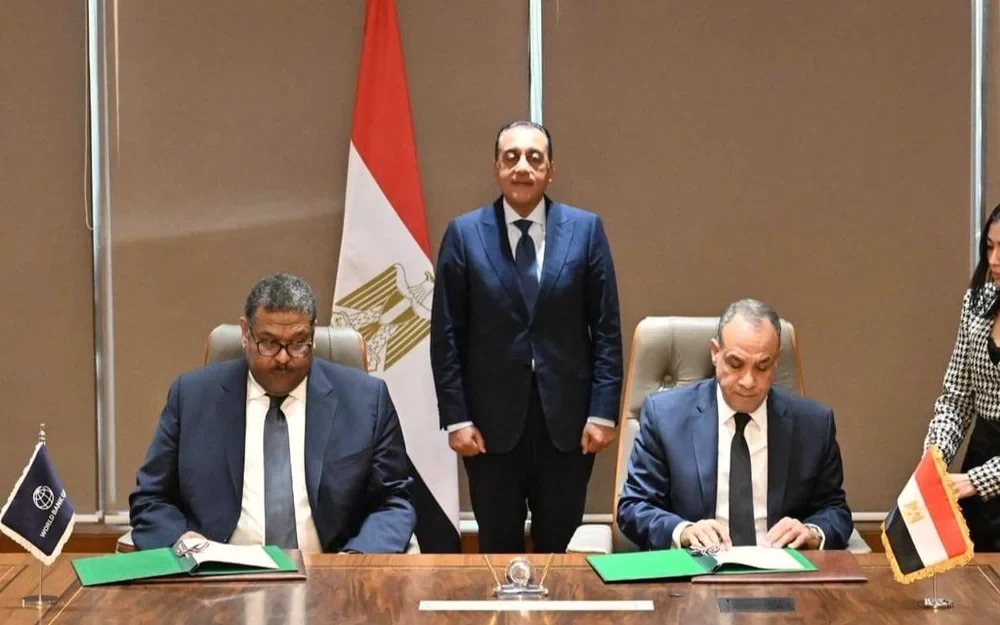
Egypt signs a $1 billion World Bank financing deal in the New Administrative Capital for the second phase of its reform programme
Egypt signed a $1 billion financing agreement with the World Bank on Sunday 1 November 2026, the second phase of its Development Policy Financing programme, witnessed by Prime Minister Mostafa Madbouly at the Foreign Ministry headquarters in the New Administrative Capital.
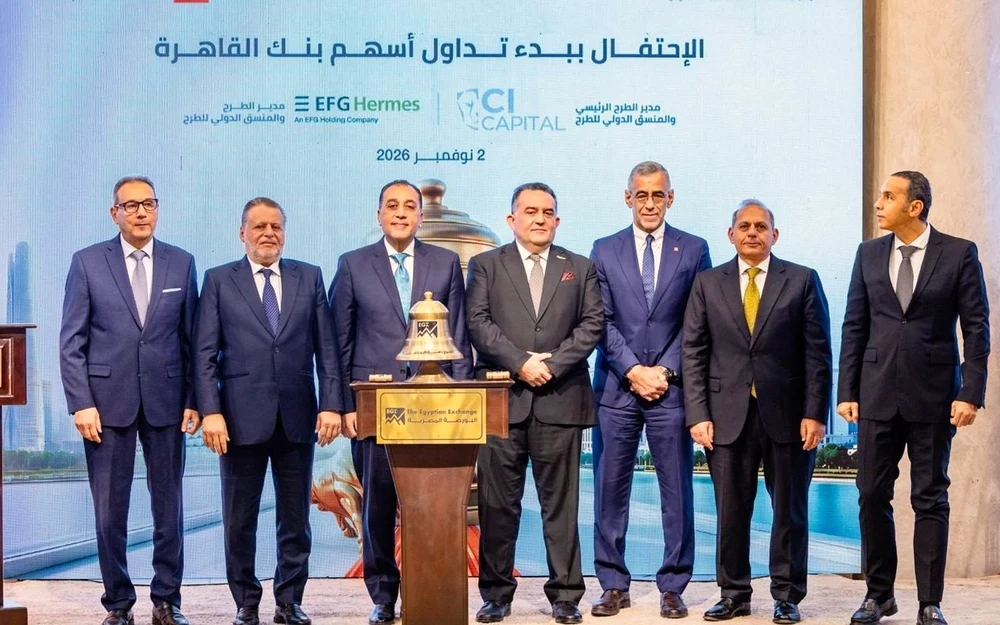
Banque du Caire begins trading on the EGX in Egypt's largest-ever IPO, selling 45% for EGP 36.37bn
Banque du Caire began trading on the Egyptian Exchange on Monday 2 November 2026 under the ticker BQDC, after a 45% stake sale priced at EGP 5.30 a share raised EGP 36.37 billion — the largest initial public offering in the history of the Egyptian capital market.
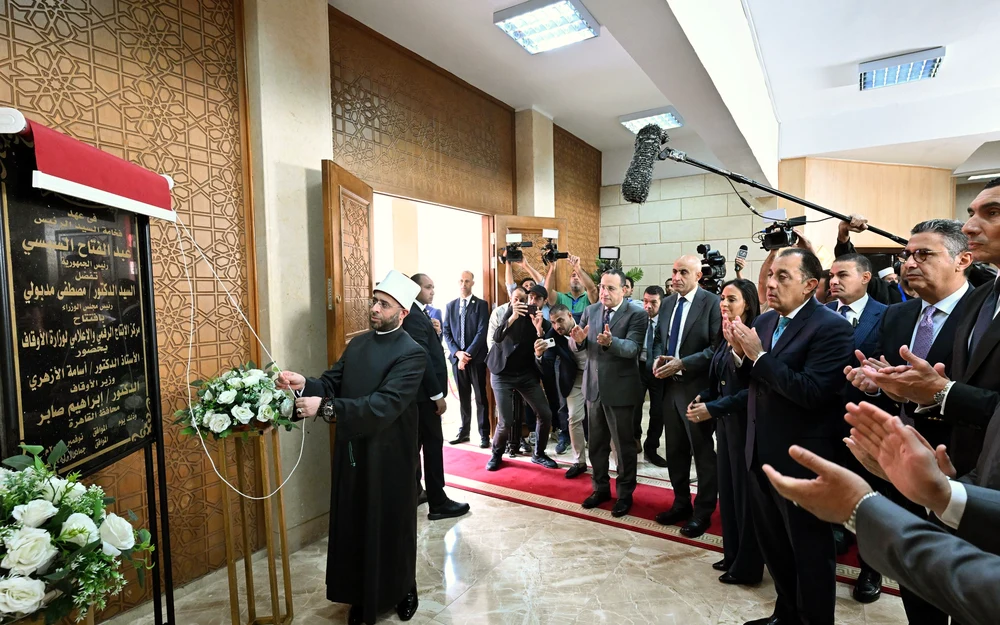
Cairo's Awqaf ministry opens an AI production centre aiming for 3,000 videos a month
Prime Minister Mostafa Madbouly opened the Ministry of Awqaf's Digital and Media Production Centre on 2 November 2026. Staffed by about 40 AI and digital-content specialists, with a plan to grow to about 150, it aims to produce up to 3,000 films and clips a month across five audience tracks.