
Satellite radar reveals a 2,600-year-old mudbrick complex buried beneath Buto in the Nile Delta
Egyptian researchers using Sentinel-1 satellite radar and electrical resistivity tomography have mapped a large Saite-period mudbrick structure, about 20 by 25 metres, buried 3 to 6 metres beneath Kom C at Buto (Tell el-Fara'in) in the northwestern Nile Delta, built on a deliberately laid bed of clean sand. The study was published in Acta Geophysica in March 2026 and reported this week; the building's exact purpose is still uncertain.
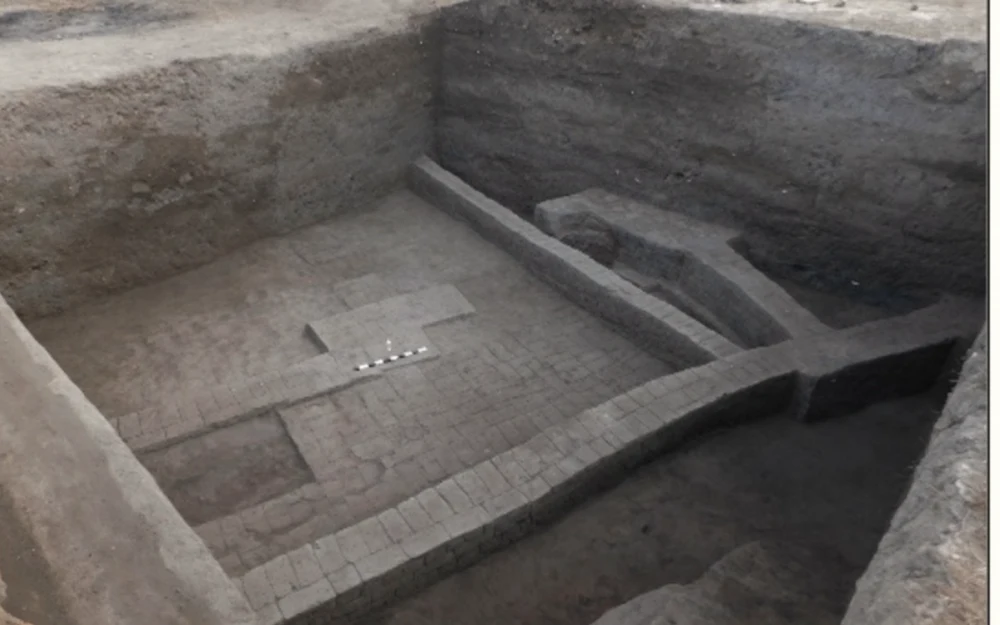
Found from space, then mapped from the ground
Buto was one of the most important religious centres of Lower Egypt, sacred to Wadjet, the cobra goddess and protector of the land’s rulers, with a history stretching back to the Predynastic period, around 3800 to 3100 BCE. Its mounds rise above the Delta plain, but the deeper occupation layers have long been out of reach: later Ptolemaic and Roman settlement piled up above earlier buildings, and groundwater and waterlogged Nile Delta clay make deep excavation difficult. The team, led by researchers from Kafr el-Sheikh University and Egypt’s National Authority for Remote Sensing and Space Sciences, turned to methods that look underground without digging. They processed a Sentinel-1 radar image captured on 5 May 2018, which revealed the oval anomaly beneath Kom C. They then ran 15 parallel electrical resistivity tomography surveys across about 5,400 square metres, sending currents through the ground and measuring how they moved, and built a three-dimensional model of what lay below.
The model showed a large rectangular mudbrick structure measuring about 20 by 25 metres, with substantial walls up to 5 metres thick and evidence of an associated enclosure, lying 3 to 6 metres below the surface. The upper three metres held scattered mudbricks, pottery and limestone fragments from Ptolemaic and Roman occupation; the Saite-period architecture lay beneath them. The researchers date the structure to the late eighth century BCE or the Saite period, the 26th Dynasty, which ruled Egypt from about 688 to 525 BCE.
A sand foundation laid on purpose
The most surprising find lay deeper still. At about 6 to 7 metres down, the surveys identified a thick layer of relatively clean sand beneath the mudbrick walls. Boreholes show that natural sand occurs considerably deeper beneath Buto, so the researchers conclude the shallower deposit was deliberately introduced — an artificial foundation under the building. Such a bed could have spread the structure’s weight, improved drainage and kept groundwater from rising directly into the mudbrick walls. Study co-author Abdelaziz Elfadaly said the discovery could explain how substantial mudbrick architecture survived despite Buto’s high water table and unstable clay-rich sediments. Hussein Bassir, director of the Antiquities Museum at the Bibliotheca Alexandrina, who was not involved in the study, called the use of pure sand as a stabilising cushion “a brilliant, deliberate tactic”, adding that “the ancient builders profoundly understood their environment”.
The dig confirmed the scans
To test the geophysical results, the team excavated a 10-by-10-metre area within Kom C, labelled Square C1. The dig confirmed thick mudbrick walls at approximately the depths the electrical survey had predicted, providing physical evidence that the anomalies were buried architecture. The excavation also recovered a collection of artefacts: ushabti figurines, small figures placed in burials to serve the dead in the afterlife; a limestone altar with carved channels, with dried residues described as consistent with animal blood, which may indicate offerings; a faience baboon figurine, an animal associated with Thoth, god of wisdom and writing; and amulets depicting Egyptian deities including Isis, Horus, Taweret and Wadjet, along with a steatite scarab bearing the name of King Thutmose III. Taken together, the objects point to a religious or funerary character for at least part of the complex.
What the building was is still an open question
Its exact purpose remains uncertain. The researchers suggest it could have been a small or secondary temple, a religious service complex, a priestly house or a funerary structure, and further excavation will be needed to establish its precise function. Buto was largely abandoned after the Old Kingdom and remained unoccupied as a settlement for roughly 1,500 years before it was resettled in the Third Intermediate Period, and the Saite-period building is evidence of the city’s renewed activity in the seventh and sixth centuries BCE. The team now plans wider electrical resistivity surveys with larger electrode spacing to investigate deeper levels, alongside studies of ancient plants and the changing geology of the Nile Delta to reconstruct the landscape around Buto when the complex was built. Their paper also notes that, in addition to the known temple, another temple may remain buried under a thick clay layer at the site.
More from Cairo

Cairo ICT 2026 opens in New Cairo on 7 November, marking 30 years with 'AI in Action'
The 30th edition of Cairo ICT, the Middle East and Africa's technology exhibition and conference, opens on Saturday 7 November 2026 at the Egypt International Exhibition Center in New Cairo and runs until Tuesday 10 November under the theme 'AI in Action', with more than 580 exhibitors and 550 speakers, under the patronage of Prime Minister Mostafa Madbouly.
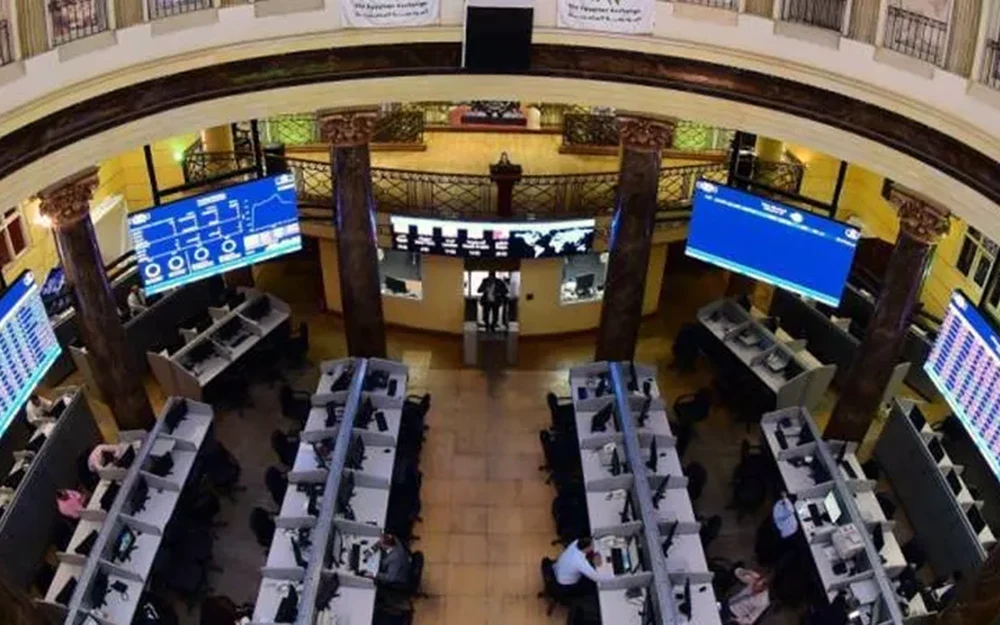
EGX30 jumps 2.83% to 50,650 as the Egyptian Exchange gains about EGP 99 billion in a day
The Egyptian Exchange closed Wednesday 4 November 2026 with gains across all its indices for a second straight session: the benchmark EGX30 rose 2.83% to 50,650.18 points, reclaiming the 50,000 mark, as market capitalisation grew by about EGP 99.2 billion to EGP 3.989 trillion, driven by net buying from foreign and Arab investors while Egyptian investors sold.
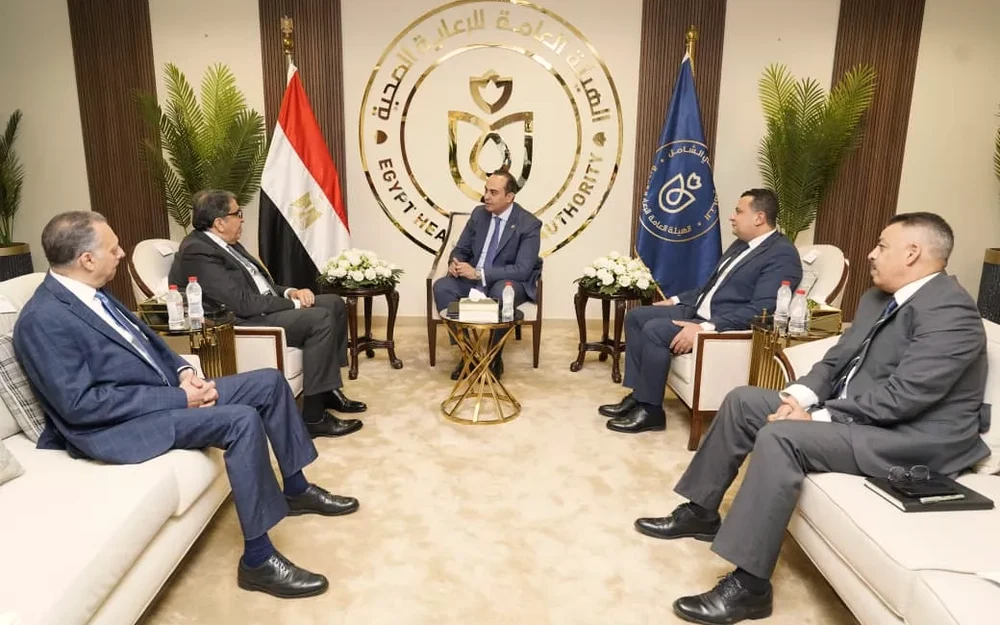
Healthcare Authority and e-Finance plan national digital-health alliance, with a Clinc Plus pilot in Minya
The General Authority for Healthcare and e-Finance met in Cairo on Wednesday 4 November 2026 to discuss building a national alliance in digital health technology to support Egypt's Universal Health Insurance System, including linking hospital information systems with the claims and payments system, and a possible pilot of the Clinc Plus system in five primary-care units in Minya, with a formal cooperation agreement to be signed during Cairo ICT.