
Grand Egyptian Museum wins Italy's Paestum Award — and lights up after dark with Eternal Sun
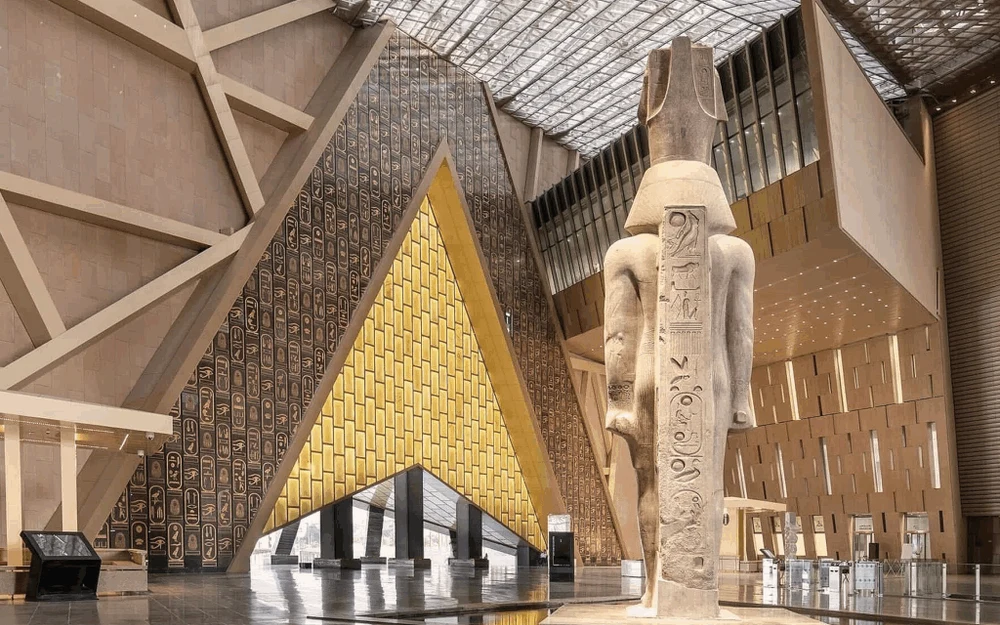
The Grand Egyptian Museum has won the 2026 Paestum Award in Italy for protecting antiquities and encouraging cultural cooperation across the Mediterranean, days after its first anniversary. Its new evening show, Eternal Sun, now turns the Grand Hall into a 35-minute light-and-sound journey through 5,000 years of Egyptian civilisation.
An Italian prize for Giza
The Paestum Award recognised the museum for protecting antiquities and for encouraging dialogue and cultural cooperation among the peoples of the Mediterranean. Dr Ahmed Ghoneim, chief executive of the Grand Egyptian Museum Authority, received the award in Paestum, and was also given a separate personal recognition for his work in managing and governing museum institutions. The prize has been awarded since 2005 to people and institutions that promote archaeological heritage, cultural tourism and dialogue between cultures.
It was the museum’s second international honour in the same week. The International Press Club in Spain also recognised the museum for its architectural and cultural significance and its role in preserving human heritage for future generations; Egypt’s ambassador to Spain, Ehab Badawi, received that award at a ceremony in Madrid. The museum, the largest in the world dedicated to a single civilisation, marked the first anniversary of its inauguration on 1 November 2026, a year after it was inaugurated on 1 November 2025 and opened fully to the public on 4 November.
Eternal Sun: the Grand Hall after dark
Eternal Sun opened on 1 November as the first event in the museum’s anniversary programme, which runs to the end of the year. The 35-minute performance uses projection mapping on the Grand Hall’s walls and architecture, with moving lights, live music and narration in Arabic and English, to tell the story of the rising sun, the flooding of the Nile and the harvest — five millennia of Egyptian civilisation. The creative direction is by Amr Abdel Nasser, who also heads the temporary exhibitions department at Legacy Development and Management, the Hassan Allam Holding company that operates the museum.
The show runs five evenings a week — Sunday, Monday, Tuesday, Thursday and Friday — with two performances a night, at 7:30pm and 9:00pm, and no performances on Wednesdays or Saturdays. It is listed as running until 30 April 2027. Tickets are sold separately from gallery admission: EGP 480 for an Egyptian adult and EGP 240 for an Egyptian child aged six to 12, booked through the museum’s official ticketing site, tickets.gem.eg. An Eternal Sun ticket does not include admission to the galleries, and children under six are not admitted; visitors under 15 must be accompanied by an adult. Tickets are non-refundable and non-transferable, and visitors are asked to arrive 30 minutes before the performance.
A year of five million visitors
The museum says about five million people visited in its first year, around 60 percent of them from outside Egypt. The galleries stay open until 9pm on Wednesdays and Saturdays and close at 6pm on the other five days. Admission prices also changed on 1 November: an Egyptian adult ticket now costs EGP 220, up from EGP 200, and a foreign adult ticket EGP 1,830. The museum stands at El Remayah Square on the Cairo–Alexandria Desert Road in Giza, and its collection holds nearly 50,000 artefacts, including the complete funerary collection of Tutankhamun, displayed together for the first time.
More from Cairo
The bones of Dahshur's princesses suggest they were archers — and experts disagree
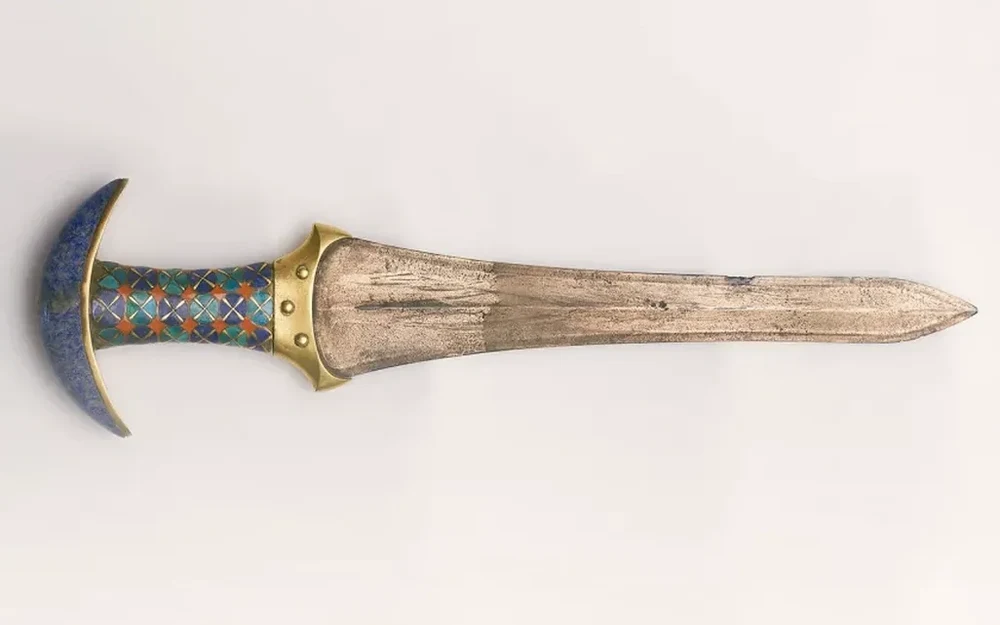
A study of six royal skeletons from Dahshur, rediscovered in the Egyptian Museum's basement in 2020, argues that Middle Kingdom princesses buried with bows and daggers had actually used them. Outside specialists say the bones alone cannot prove it.
Ministry of Labour announces 1,576 new private-sector jobs in 11 governorates
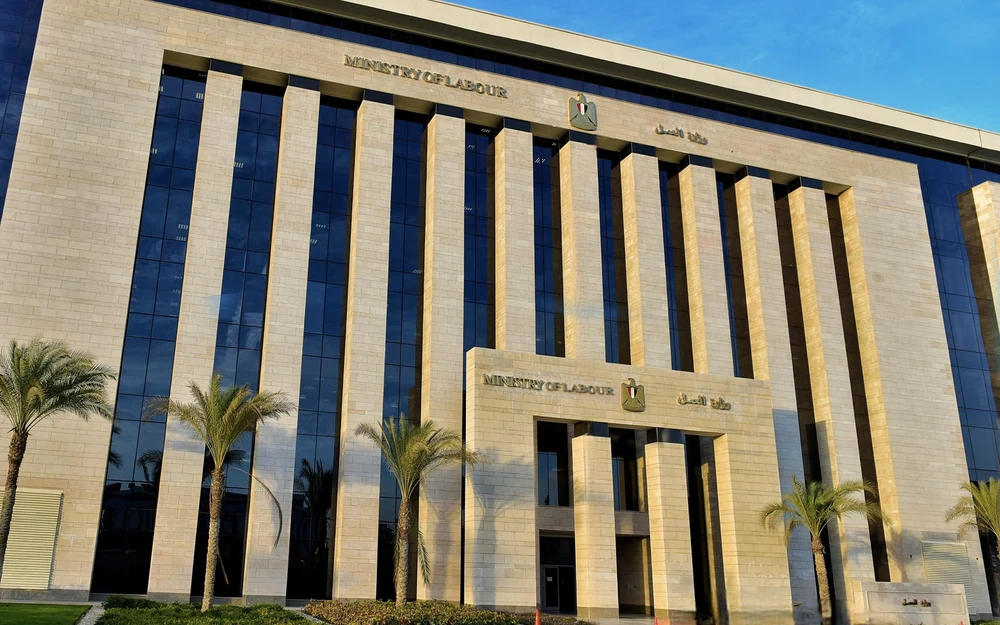
Labour Minister Hassan Raddad has announced 1,576 new private-sector jobs at 30 companies across 11 governorates in the ministry's November 2026 employment bulletin. Applications are open through the ministry's employment office in Nasr City, governorate labour directorates, directly with the companies, or on the ministry's website.
EGX30 pushes past 51,000 as foreign buying lifts the Egyptian Exchange for a third straight day
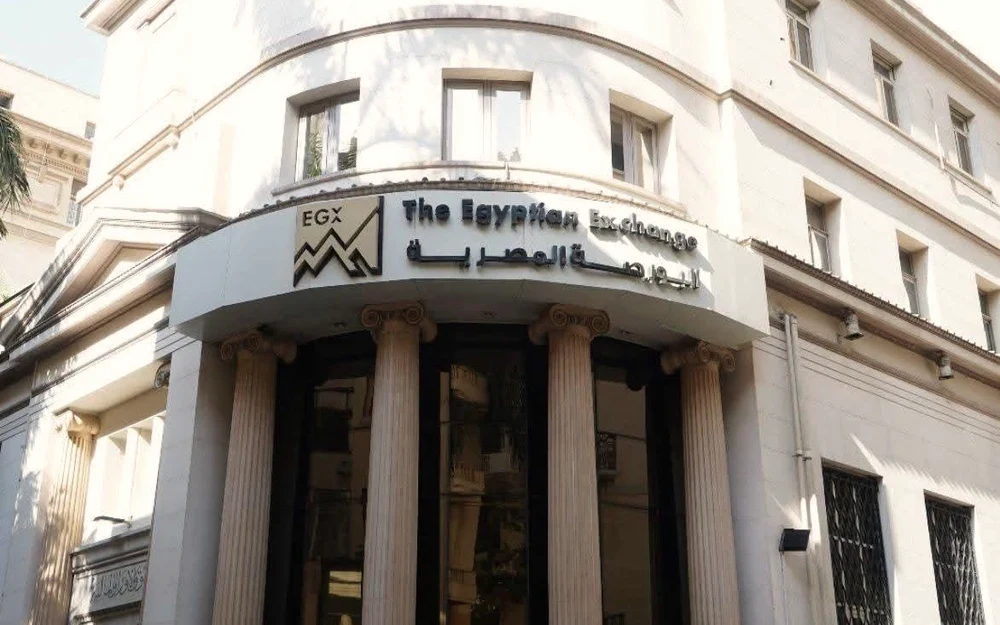
The Egyptian Exchange's benchmark EGX30 closed Thursday 5 November 2026 at 51,152.73 points, up 0.99%, its third straight daily gain and its first close above 51,000, as foreign investors were the session's only net buyers and market value rose by EGP 61.2 billion.