
Transport minister faces parliament over Al-Ayyat crash: ‘We admit there are mistakes’
Transport Minister Kamel El-Wazir told the House Transport and Communications Committee that the train in Sunday's Al-Ayyat collision had passed inspection signed by 21 officials, denied ever ordering the automatic train control switched off, and admitted mistakes in the railway system, as MPs and parties demanded accountability for the crash that killed seven people and injured 125.
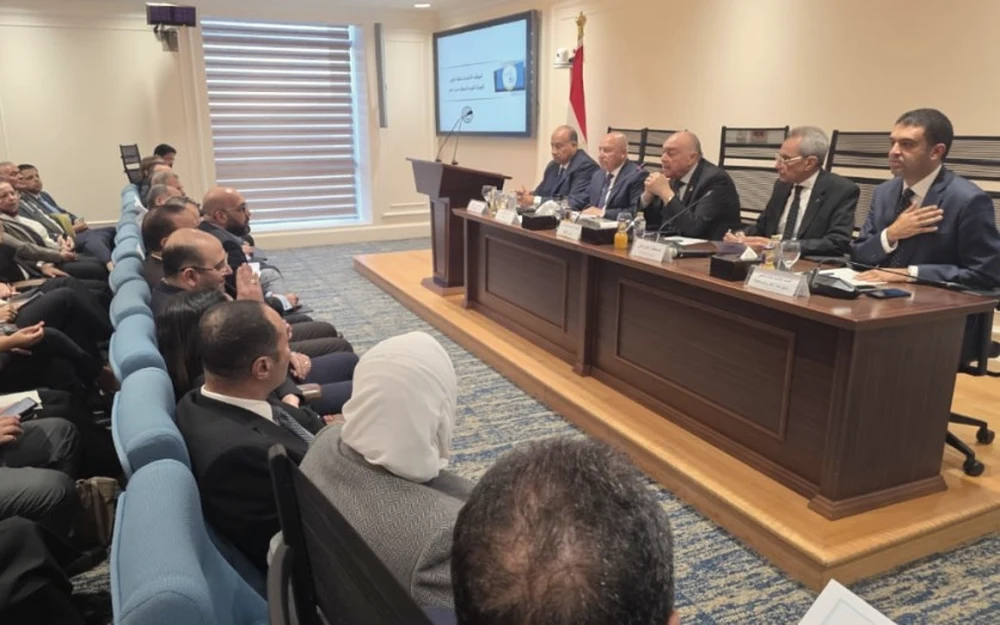
The session
The committee met at 3pm on Tuesday, chaired by Wahid Qorqar, after Speaker Hisham Badawy approved Qorqar’s request for an emergency sitting. The minister attended with government officials, and the committee stood for a minute’s silence for the victims. Qorqar said the committee was waiting for the government to present a clear and transparent account of the crash, the measures taken and the practical steps to prevent a repeat. The health minister apologised for not attending; the minister for parliamentary affairs, Hani Hanna, was present.
“I do not know why the ATC was switched off”
The minister told the committee he had never issued instructions to switch off the automatic train control (ATC) system on trains, and had expressly criminalised switching it off. He said he had allowed it only once, in an exceptional case, when a delayed train was permitted to proceed at 15 kilometres an hour to the nearest station in Luxor, where passengers were taken off and carried on ministry buses. “I do not know why the Al-Ayyat train employee switched off the automatic control system. The prosecution is the one to say,” he said. The Public Prosecution said on Monday that its technical examination, by professors from Cairo University’s Faculty of Engineering, found the driver of Train No. 134 had disabled the system, that the Al-Raqqa station controller and station master had failed to monitor the signal panel for tower T-10, and that a signal logbook had been altered. The controller and the station master are detained for four days pending investigation, and the assistant driver of Train No. 134 is held pending questioning. These are investigation-stage findings, not convictions.
Twenty-one officials signed the checks
El-Wazir said the train that caused the crash had been inspected in the workshop before it left, with 21 officials signing off on the security, safety, cleanliness and ambulance checks. He said the development of the railway began after the Ramses station accident in 2019, when he took office on 11 March that year. The ministry has refurbished 1,404 old third-class carriages, some 50 to 60 years old, as “Tahya Misr” carriages instead of taking them out of service, including carriages in the train involved in the Al-Ayyat crash, and has completed 54 bridges to replace level crossings. The high-speed electric train will have no level crossings at all, he said. He also said the railway workforce has fallen from about 50,400 in 2019 to about 30,400 now, and that 62 employees with question marks over them have been dismissed.
“We are not good at management and operation”
The minister told the committee the railway system still had mistakes and risks, and that the ministry’s job was to limit them and neutralise their causes. “We admit there are mistakes, and there will be mistakes, but our role is to limit them,” he said, adding that passenger safety was the ministry’s first responsibility. He acknowledged shortcomings in management and operation and said the ministry would expand private-sector participation in running the railway. He said the ministry had repaid $870 million of its loans, and that refurbishing a locomotive costs $1 million against $6 million to buy a new one. He also said he had visited the injured at Al-Wasta hospital, where four patients were being treated and three had since been discharged, and was following the injured at Beni Suef University Hospital.
Calls for accountability
The crash has brought a wave of parliamentary and party demands for accountability. The Al Adl Party filed three urgent motions to summon the minister, and its MP Hussein Horeidy demanded the minister’s resignation and that he bear political responsibility for the crash. The Egyptian Social Democratic Party filed an urgent briefing seeking the minister’s dismissal, and the Al-Waai Party called on him to resign. The committee’s secretary, Ahmed el-Derby, said the session’s purpose was not to interrogate the minister or confront him with premeditated accusations, and that dismissals alone were not a solution. MP Mohamed Salah Abu Humaila said the name Al-Ayyat had become tied to train accidents and demanded a comprehensive study of the latest crash and clear explanations for their recurrence, as well as better medical services at Al-Ayyat Central Hospital. President Abdel Fattah El-Sisi has ordered an urgent investigation and said anyone found negligent would be held to account. The collision happened on Sunday 8 November, when Train No. 134, a Giza to Fayoum service, ran into the rear of Train No. 2010, a Cairo to Aswan service standing on the same track between Kafr Ammar and Al-Raqqa stations, derailing carriages onto a countryside road.
More from Cairo

Giza startup AlProtein takes second place at FrancoTech 2026 for AI-grown duckweed protein
Giza-based food-tech startup AlProtein has won second place in the Best Digital Innovation category at the FrancoTech Innovation Competition 2026 in Phnom Penh, Cambodia, for its AI-powered system that turns duckweed into sustainable protein ingredients for food manufacturers.
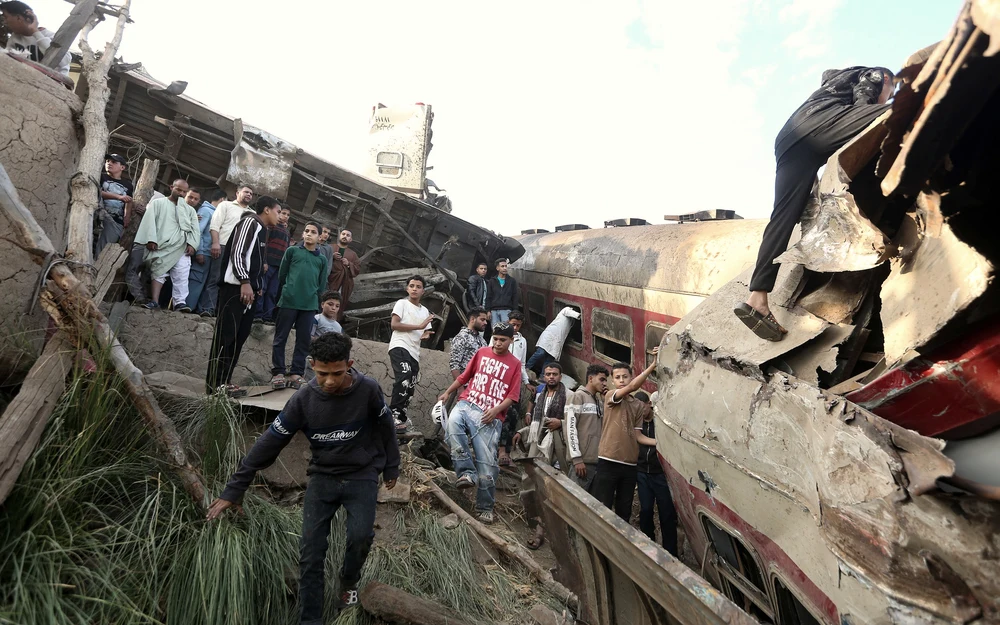
Seven killed and at least 125 injured as two trains collide at Al-Ayyat in Giza
Seven people were killed and at least 125 injured on Sunday 8 November when a Giza–Fayoum train struck the rear of a stationary Cairo–Aswan service at Al-Ayyat in Giza, derailing six carriages.
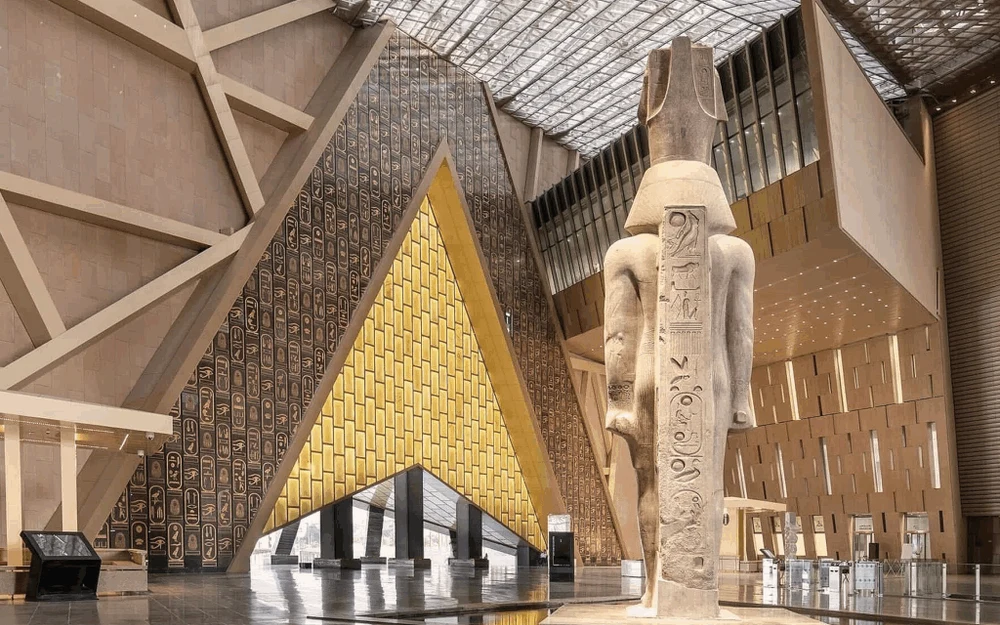
Grand Egyptian Museum wins Italy's Paestum Award — and lights up after dark with Eternal Sun
The Grand Egyptian Museum has won the 2026 Paestum Award in Italy for protecting antiquities and encouraging cultural cooperation across the Mediterranean, days after its first anniversary. Its new evening show, Eternal Sun, now turns the Grand Hall into a 35-minute light-and-sound journey through 5,000 years of Egyptian civilisation.